

Disclaimer: Asia Travel Blog. This site provides general content for informational purposes only.
Breaking down on the side of a busy, rain-slicked highway or discovering your vehicle simply will not start in a deserted parking lot late at night is an incredibly stressful and highly vulnerable experience. The sudden loss of your primary mode of transportation disrupts your life instantly. In these critical, high-stress moments, panic almost always sets in, leading to rushed, fear-based decisions. Your first instinct is likely to pull out your smartphone, search for immediate roadside assistance, and aggressively tap the very first phone number that populates on the screen. Unfortunately, this impulsive action is exactly what predatory operators count on.
The roadside recovery industry is highly fragmented and incredibly diverse in its quality of service. While there are thousands of incredible, highly trained professionals who will go out of their way to secure your vehicle safely and charge a fair rate, there are also predatory operators who rely on your desperation. These bad actors frequently charge exorbitant, heavily hidden fees, utilize outdated and highly destructive mechanical equipment, or hold vehicles hostage in unverified impound lots until massive cash payments are made.
This comprehensive, detailed guide serves as your ultimate blueprint for vetting emergency transport professionals thoroughly before you actually experience an emergency. We will deeply analyze how to assess your specific vehicular needs based on weight and drivetrain, verify true round-the-clock dispatch availability, audit a provider’s mechanical hardware, demand undeniable proof of insurance, and lock in entirely transparent pricing structures. Being proactive rather than reactive is the absolute foundation of roadside safety. By carefully selecting and saving a trusted, fully vetted contact in your phone today, you protect your physical safety, shield your financial assets, and guarantee your total peace of mind when the unexpected inevitably occurs.
Evaluate Your Vehicle Weight and Transport Needs
The very first step in securing reliable roadside assistance is understanding that not all recovery vehicles are built the same, and matching the specific equipment to your specific vehicle is absolutely crucial. A staggering number of consumers make the mistake of assuming any recovery vehicle can move any passenger car or commercial rig. This lack of knowledge often results in catastrophic frame or drivetrain damage when the wrong machinery is applied to the job.
Determine if You Need Light-Duty or Heavy-Duty Support
Before you even begin researching providers, you must know your vehicle’s physical specifications.
-
Locate the gross vehicle weight rating (GVWR) printed on the manufacturer’s sticker inside your driver’s side door jamb. This number dictates the sheer mass that the recovery vehicle’s suspension and braking system must be able to safely handle.
-
Understand the limitations of standard wreckers. A standard light-duty wrecker is perfectly engineered for sedans, small hatchbacks, and compact SUVs.
-
Recognize commercial needs. If you manage a fleet of box trucks, delivery vans, or large commercial rigs, light-duty equipment is entirely useless and incredibly dangerous to deploy.
A company that excels at standard auto towing for daily commuter cars will completely lack the massive boom capacity, reinforced chassis, and specialized pneumatic braking systems required to safely execute local semi towing services for an eighty-thousand-pound tractor-trailer. Dispatching an undersized wrecker to a heavy-duty job can cause the recovery vehicle to lose steering control, creating a deadly scenario on a public highway. You must categorize your needs accurately to filter out providers who lack the physical capacity to assist you.
Identify Specialty Transport Requirements
Beyond sheer weight, the mechanical configuration of your vehicle’s drivetrain severely dictates how it can be legally and safely moved.
-
If you drive an all-wheel-drive (AWD) or four-wheel-drive (4WD) vehicle, you must explicitly demand a flatbed carrier when speaking to dispatch. Towing an AWD vehicle with two wheels on the ground forces the center differential to spin while the transmission is stationary, which can instantly and permanently destroy the complex gearing system.
-
If you own a luxury sports car with exceptionally low ground clearance, a standard ramp angle on a flatbed may rip off the front fascia or crack the oil pan. You must request a specialized carrier with a low-approach tilt deck.
-
Motorcycles require entirely unique transport. Never allow a provider to simply strap a motorcycle upright in the back of a standard pickup truck. Demand a carrier equipped with dedicated motorcycle wheel chocks and soft-loop nylon tie-downs to protect the suspension and fairings.
Document Vehicle Dimensions Before Calling
Do not rely on your memory during the adrenaline spike of a breakdown. Prepare a digital note in your smartphone containing your vehicle’s exact make, model, year, drive type, and any aftermarket modifications, such as lifted suspensions or oversized tires. Reading this precise information directly to the dispatcher ensures they send the exact right piece of machinery to your GPS coordinates on the very first attempt.
Prioritize Round-the-Clock Availability and Dispatch Logistics
When a tire blows out at two in the morning on an unlit stretch of road, the logistics of getting help to your exact location become a matter of life safety. The internet is flooded with companies claiming to be available at all times, but many of these listings are deceptive “ghost” dispatch centers or unstaffed operations that will leave you stranded in the dark.
Confirm True Overnight Operations
Many businesses advertise continuous availability simply to rank higher in online search algorithms, but their actual operational reality is vastly different. You must test these claims before an emergency strikes.
-
Call your prospective candidates late at night on a weekend as a preliminary test.
-
If your call is routed to a generic voicemail box, or if it is answered by an off-shore answering service that promises someone will call you back in the morning, immediately cross them off your list.
-
Listen for professional dispatch protocols. The person answering the phone should immediately ask if you are in a safe location away from active traffic lanes.
Roadside emergencies absolutely do not adhere to standard business hours. True 24 hour towing means a dedicated, awake, and highly trained dispatcher answers the phone at three in the morning, ready to instantly deploy a fully equipped driver to your exact geographical coordinates without hesitation.
Map the Provider’s True Geographic Base
The roadside assistance industry is currently plagued by national lead-generation call centers. These are middleman brokers who set up deceptive websites designed to look like they are located right in your neighborhood.
-
When you find a prospective provider, search their listed physical address on a digital map application.
-
Switch to “street view” to verify that an actual, physical truck yard or secure impound lot exists at that specific location. If the address points to a residential home, a vacant lot, or a generic strip mall mailbox, you are dealing with a lead generator.
-
Understand the broker model. Brokers will take your desperate phone call, mark up the price by thirty to forty percent, and then farm the job out to the cheapest, lowest-rated operator they can find.
You want to establish a relationship with a genuine local towing company with heavy-duty trucks and flatbeds physically parked in your immediate community. Dealing directly with a local dispatcher eliminates the middleman markup and significantly reduces the amount of time you will spend waiting on the shoulder of the road.
Ask for Guaranteed ETA Windows
When you are stranded, time feels like it is standing still. A vague promise from a dispatcher that a driver is “on the way” is entirely insufficient and often a stalling tactic.
-
Ask the dispatcher for a highly specific Estimated Time of Arrival (ETA) window based on your current location and active traffic conditions.
-
Follow up by asking what their internal protocol is if the driver is delayed by an accident or severe weather.
-
Request that the driver call or text your mobile phone directly when they are ten minutes out, ensuring you can safely prepare to exit your disabled vehicle only when help has officially arrived.
Inspect the Hardware and Setup Expertise
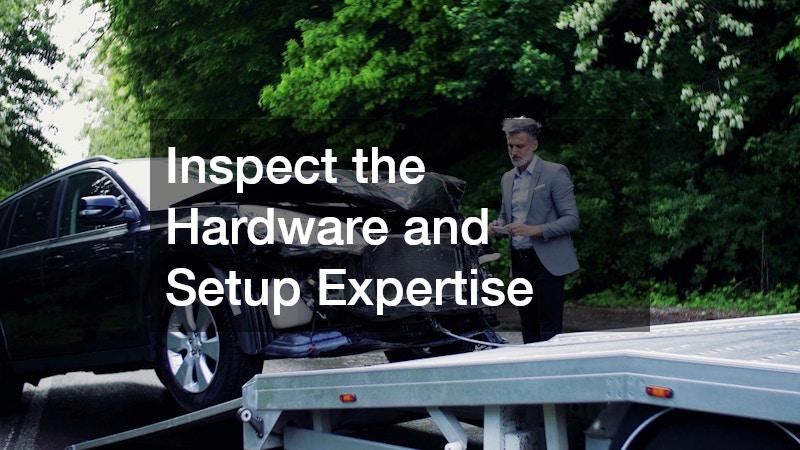
A recovery operation is a highly mechanical, heavy-industrial process. The equipment the vendor utilizes, and the way they maintain that equipment, directly correlates to the safety of your vehicle. Utilizing outdated, rusty, or improper hardware is the fastest way to turn a simple mechanical breakdown into thousands of dollars of preventable physical damage.
Ask About Modern Attachment Methods
The days of dragging a vehicle by a thick metal chain wrapped around the front bumper or suspension control arms are long over, yet some low-tier operators still utilize these highly destructive methods.
-
Ask the dispatcher if their fleet strictly utilizes modern wheel-lift technology or soft nylon recovery straps. Wheel lifts secure the vehicle entirely by the rubber tires, ensuring no metal chains or hooks ever come into contact with your painted fascias, fragile aluminum suspension components, or exhaust pipes.
-
If your vehicle requires winching out of a deep ditch or mud, ensure they use synthetic winch lines rather than frayed steel cables, which can snap under extreme tension and cause lethal injuries or severe vehicular damage.
-
Discuss complex, specialized hauls. For instance, if you are an RV owner needing to transport a dinghy vehicle across state lines, you need a provider who intimately understands the intricacies of flat tow bar installation, supplemental braking systems, and break-away switches to ensure the secondary vehicle trails safely behind the coach without destroying its own transmission.
Look for Professional and Organized Gear
When the driver finally arrives at your location, take a quick, critical glance at their rig before you hand over your keys. You have the absolute legal right to refuse service if you feel the equipment is unsafe.
-
Look for severe fluid leaks, bald tires, or deeply rusted hydraulic booms on the recovery vehicle. If the operator does not maintain their own expensive machinery, they certainly will not treat your vehicle with any respect.
-
Check for proper safety lighting. The truck should be equipped with highly visible, 360-degree amber strobe lights and DOT-reflective taping to protect both you and the operator from distracted highway drivers.
-
Observe how they store their equipment. A professional, high-quality operator treats their rig like a highly organized mobile headquarters. They keep their heavy chains, snatch blocks, nylon recovery straps, and hydraulic fluid meticulously organized inside weatherproof tow truck tool boxes mounted flush to the chassis. This ensures the critical gear protecting your multi-thousand-dollar car isn’t compromised, rusted, or degraded by the outdoor elements.
Request Pictures or Fleet Descriptions
Before you ever need to make an emergency call, look at the prospective vendor’s official website or active social media pages. Reputable operators are incredibly proud of their fleets. They will frequently post high-resolution photos of their clean, modern flatbeds and heavy wreckers actively working on complex recoveries. If a company hides what their trucks look like, they are likely hiding outdated, unmaintained, or unsafe equipment.
Demand Proof of Proper Licensing and Comprehensive Insurance
The physical act of hoisting a two-ton vehicle into the air and transporting it down a public highway at sixty miles per hour carries an immense amount of legal liability. If the operator makes a critical error, drops your vehicle, or causes a collision, you must be absolutely certain that their insurance policies—not your personal auto policy—will cover the catastrophic financial losses.
Verify State and Municipal Permits
The transportation industry is heavily regulated by both federal and state authorities for a reason. Operators are required to maintain strict compliance with weight limits, driver fatigue laws, and rigorous safety audits.
-
Ask the provider for their Department of Transportation (USDOT) number or their specific state motor carrier license number.
-
Take five minutes to verify that number through your state’s online commercial transit portal or the Federal Motor Carrier Safety Administration (FMCSA) website. The portal will tell you if their operating authority is active, suspended, or revoked.
-
Check for municipal operating permits. Many cities require operators to carry specific city medallions to legally perform roadside services within city limits.
Unregulated towing companies often blatantly ignore federal safety standards, hire drivers without proper commercial licenses, and skip mandatory brake inspections. Putting your vehicle in the hands of an unlicensed operator puts your asset at massive financial risk and endangers the lives of everyone else on the highway.
Check for On-Hook Liability Coverage
This is the most critical insurance distinction you must understand. A provider might tell you they are “fully insured,” but that phrase is often highly misleading.
-
Explicitly ask the dispatcher or the business owner if they carry specific “On-Hook” or “Garagekeepers” insurance policies, and demand to know what their maximum payout limit is per incident.
-
Understand standard liability limitations. Standard commercial auto liability insurance only covers the damage the truck causes to other vehicles if the driver causes a crash. It does not cover the cargo they are hauling.
-
Protect your asset. If a local tow truck gets into a severe accident, hits a low bridge, or suffers a hydraulic failure while your car is attached to its boom or sitting on its flatbed, their standard liability insurance will unequivocally deny the claim for your vehicle. Only specialized, highly expensive on-hook coverage protects the asset they are actively transporting.
Read Through Independent Digital Reviews
A company can claim to be fully licensed and perfectly safe on their website, but past client experiences will reveal the truth about how they handle damage claims when things go wrong.
-
Completely ignore the glowing, five-star ratings prominently displayed on the provider’s own homepage, as these are easily curated or entirely fabricated by marketing teams.
-
Navigate to independent, third-party review sites. Focus your attention entirely on the three-star and two-star reviews. These moderate reviews are rarely written by internet trolls; they are usually written by honest consumers detailing specific, nuanced frustrations.
-
Look for recurring patterns. If multiple former clients complain about scratched wheels, dented oil pans, or the company aggressively denying obvious damage claims and refusing to provide their insurance information, walk away immediately.
Demand Itemized Estimates and Uncover Hidden Fees
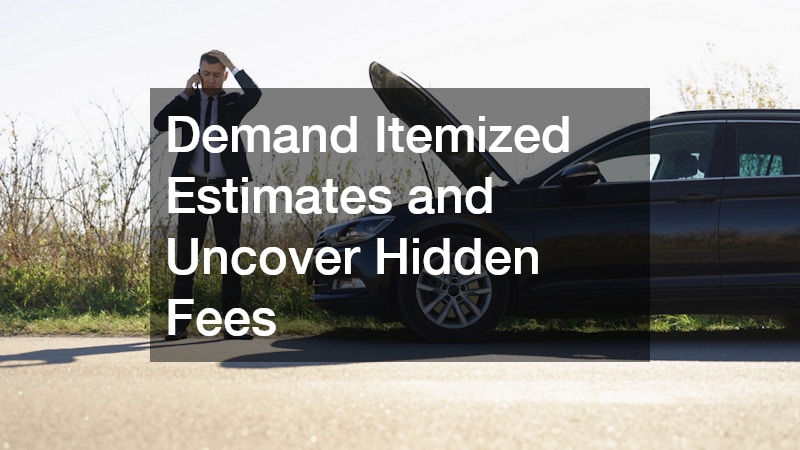
The most common area of friction and sheer outright fraud in the roadside assistance industry involves pricing. Predatory operators thrive on the ambiguity of an emergency, using your desperate desire to get off the side of the road to lock you into heavily inflated invoices. You must empower yourself to navigate pricing scams, predatory yard fees, and massive cash-only red flags before the truck ever arrives.
Refuse Vague Phone Quotes
When you are stranded, you just want to hear a number. However, accepting a vague verbal quote over the phone is a massive mistake. A common tactic is for a dispatcher to quote a phenomenally low “hook-up” fee to secure your business, conveniently failing to mention the myriad of other charges they will apply later.
-
Never agree to a service based solely on a low initial hook-up fee. Demand a complete, detailed, line-item breakdown of the entire estimated cost.
-
Ask for the specific per-mile rate. Clarify if you are being charged for “loaded miles” (only when your car is on the truck) or “en-route miles” (the distance the truck travels just to get to you).
-
Inquire about situational surcharges. Ask if there are extra fees for winching the car out of the mud, using specialized dollies for a locked transmission, or working after midnight.
Dishonest operators advertise ridiculously low flat rates for their tow truck services to quickly secure the job, only to add massive, undisclosed mileage multipliers, administrative surcharges, and “special equipment” fees once your car is physically hoisted in the air and you have no leverage to argue.
Ask About Yard Storage and Administrative Charges
If your vehicle cannot be taken directly to your trusted mechanic because it is the middle of the night, the operator will likely suggest taking it to their secure impound yard until the morning. This is where the most devastating hidden fees accumulate.
-
If your vehicle is heading to a holding yard, demand a written list of their daily storage fees, environmental cleanup fees, and administrative processing charges.
-
Ask about gate release fees. Some yards charge an exorbitant fee simply to open the gate and let your mechanic retrieve the vehicle the next day.
-
Understand the weekend trap. Many yards are strategically “closed” on the weekends. Some towing companies deliberately delay releasing vehicles on Friday afternoons just to legally hold your car hostage, forcing you to pay an extra forty-eight hours of storage fees for Saturday and Sunday. Knowing these rules upfront prevents this aggressive form of financial extortion.
Clarify Accepted Payment Methods Upfront
Before you ever finalize the dispatch, you must explicitly clarify exactly how the final invoice will be paid. This single question can immediately weed out the most dangerous scam artists in the industry.
-
Ask the dispatcher what specific payment methods are accepted (credit cards, digital wallets, fleet cards) and ensure the driver carries a mobile credit card terminal in the truck.
-
If the dispatcher or the driver insists on a “cash only” transaction at the scene, hang up the phone or refuse to let them hook up your car.
-
Understand the cash-only scam. Legitimate businesses want the security and paper trail of digital payments. Cash-only demands usually mean the operator is operating entirely off the books, avoiding taxes, and eliminating any paper trail. If they damage your vehicle and you paid in untraceable cash, you will have absolutely no recourse with your bank, your insurance company, or the local authorities.
Always demand a printed or digitally emailed receipt that clearly shows the company’s name, USDOT number, itemized charges, and the driver’s signature before the transaction is finalized.
Finding highly reliable, ethical roadside assistance is not a task that should be left to a panicked internet search while standing on the dangerous shoulder of a highway in the pouring rain. By the time the engine dies or the tire shreds, your ability to rationally vet a contractor is severely compromised. Finding the right professional requires taking the time right now, in the comfort of your home, to deeply verify heavy-duty capabilities, confirm true round-the-clock dispatching reality, audit complex insurance policies, and demand incredibly transparent, itemized pricing structures.
Your vehicle is undoubtedly one of your most valuable financial assets and your essential lifeline to daily life, work, and family. Entrusting that asset to an unverified, uninsured, or predatory operator is a massive financial and physical gamble that you simply do not need to take. Taking aggressive control of the vetting process ensures that when the unexpected and terrifying moments of a breakdown happen, your vehicle—and your physical safety—are handled by true professionals who prioritize mechanical integrity over a quick cash grab.
Do not wait for disaster to strike. Start your preparation today. Use the rigorous criteria outlined in this guide to select a highly-rated, fully insured, and completely transparent local provider. Call their dispatch center to test their responsiveness, ask the hard questions about their equipment and insurance, and program their direct dispatch number into your smartphone’s favorite contact list immediately. By doing the hard work today, you ensure that high-quality, ethical help is only a tap away when every single second counts.